Articles avec le tag ‘mafia’

 Le 16 mars 2010, les policiers de Crotone jubilent. Ils viennent d’arrêter Pasquale Manfredi, 33 ans, un soldat de la ‘ndrine (famille mafieuse calabraise) Nicoscia-Manfredi d’Isola Capo Rizzuto. Il figurait sur la liste des cents « latitante » (en cavale) les plus recherchés. Et pour cause, il est accusé d’association mafieuse, de détention d’armes de guerre. Il se serait entraîné dans la région de Pavie (dans le nord de l’Italie) pour assassiner le capo bastone Carmine Arena (décédé dans sa voiture blindée après un tir de bazooka (cf. La guerre des ‘ndrines s’étend à la province de Crotone?). Cela illustre le goût des mafieux calabrais pour les armes de guerre et la présence mafieuse dans le nord de l’Italie :
Cliquez sur les lien suivant ;
Exécution mafieuse en Lombardie
Les policiers le décrivent comme « froid et cruel ». Froid mais pas très malin ; les policiers l’ont repéré a l’aide de sa connection (clef 3G) à Facebook et sous le pseudonyme « Scarface » !
POWERS AND THE ITALIAN MAFIAS
TERRITORIAL CONTROL VS. THE LEGALLY CONSTITUTED STATE
Fabrice Rizzoli phd graduate Italian mafias and international relationships
translation of this article in french politi and constitutional revew
In Italy, the mafia does not exist. The Sicilian mafia-like organization is called Cosa Nostra, in Calabria it is called the ‘Ndrangheta, in Campania, the Camorra, and in Apulia, the Sacra Corona Unita. The four mafia-like organizations, which are generically referred to as the mafia for the sake of simplicity, look alike without being identical. The reader can visualize their historical areas of influence in the following map.
Unlike the Chinese or the Russian phenomena, the Italian mafias are scientifically known, because Italy is a democracy (police, public freedom, independent magistracy, press freedom, pluralism of political parties, university researches, etc.), a political system enabling the production of sources. From 1962 to January 2006 the Parliamentary Commission for the Inquiry into the Mafia was regularly in session and the opposition could present its own report, called “the report of the minority”. Although a verdict on the culpability or innocence of a person under investigation does not give an account of the intensity of the connections between the mafiosi and the ruling class, it is possible to analyze the deeply motivated decisions of the legal system on the other side of the Alps. More recently, geopolitics – the study of the interaction between the territory and the actors on the political stage, their objectives and their strategies – has proven effective for overcoming the interdisciplinarity of the subject “mafia”. By the reappropriation of the instrument of inquiry, geopolitics enables to link seemingly isolated facts together, to rationally interpret them to gain a complete picture between politics, business and criminal associations. Source analysis shows that the history of Italian mafia-like organizations is a history of power management.
The mafia is a political actor that exerts an authority by means of violence. The power of the mafia is based on the accumulation of capitals and their exploitation in a business-like manner. The mafia benefits from social consensus and possesses a political dimension that makes it indispensable for part of the ruling class. The Italian State is one of the best equipped against mafia-like powers.
THE SOVEREIGNTY OF THE MAFIA: SYSTEMATIC VIOLENCE AND RETICULAR TERRITORIAL CONTROL
A political entity rival to the State, which competes with it for the legal use of violence, the mafia shows its power by means of intimidation. The mafia uses systematic violence to obtain a social network. Systematic violence, sparingly used by a small number of criminals, provides them with a comprehensive control of the populations. Indeed, thanks to violence, which breaks up solidarities and isolates individuals, the mafioso is at the center of society.
Mafia-like violence, also called “planned violence”, founds a parallel legal order. Within the clan, violence awards prestige. Mafia-like execution is a decision of justice used symbolically, as a language. In 1993 a bomb in a church means that the Sicilian mafia holds a grudge against the pope for taking a stand against it. On August 15, 2007, in Duisburg, the clan Nirta-Strangio orders the killing of seven members of a rival family on the day of the Assumption of Mary, as a response to the murder of Maria Strangio on December 25, 2005. When a citizen does not respect the rules imposed by the mafia, they can be murdered even years after their default, in order to make mafia-like law everlasting and more powerful than that of the legally constituted State. Thus, in Calabria, a clan killed a farmer eight years after he refused to sell a piece of land. The mafia eliminates in particular those people that have eluded the Italian law. In a symbolical manner, it takes away from the State its prerogative “justice”. For instance, in September 2008, in a small town near Reggio Calabria, two drivers argue over a parking spot. One of them pulls out a gun and kills the other driver, who is the son-in-law of the local mafia boss. Understanding the extent of his gesture, the murderer runs away. The relatives of the victim arrive on the scene of the accident and try in vain to transport the boss’s son-in-law to the hospital. They leave the corpse in front of the cemetery to gain time against the Italian law. The Calabrese mafia family must indeed apply “planned violence”. The person who committed the crime and who has not turned himself to the Italian law is found murdered with a bullet in the back of his head in Rome twenty-four hours later. The Calabrese clan has just relegated the Italian State to an entity inferior to the mafia: a mafia capable of dealing out a lightning justice.
Violence is equally used to prove the ability to govern the territory. To carry out the checkering of the terrain, the mafias lean on a military power. The four mafias, an army without a uniform, have 24,000 armed soldiers who control the territory of the mafia. In Naples, since the earthquake of 1980, the Camorra has taken control of some areas. The clans seized some reconstructed buildings to accommodate some families without the authorization of the town council. Families feel indebted to the camorrists and protect them in their escape. These “forts” of the Camorra are unique in Europe. Sicily is divided into provinces, which are divided into mandamento, cantons that group together at least three mafia families. In Calabria, the territorial unit is the locale. The cities of Palermo, Naples, and Reggio Calabria are divided into areas as shown in the following map.
Using this type of criminal political subdivisions, the Italian mafias “levy taxes” by systematically extorting money from economic businesses. In Palermo and in Reggio Calabria, 80% of all storekeepers pay the pizzo, the “tax” imposed by the mafia. Racketeering is a demonstration of power and an opportunity to accumulate capitals.
FROM THE ILLEGAL ACCUMULATION OF CAPITAL TO THE INFILTRATION IN THE LEGAL ECONOMY
Every year, the EURISPES (European Institute for Political, Economical, and Social Studies) presents a geo-economical state of the Italian mafias. In 2008, they stored up 130 billion Euros, which represent 10% of the brought-in wealth in Italy. The main source of illegal accumulation of capital is drug trafficking (59 billion Euros). “Ecomafias”, the criminal activities that undermine the environment (cement and waste cycles, illegal trade of works of art and animals), yield 16 billion Euros, whereas the illegal trade of weapons and other kinds of illegal trade yield 5.8 billion. Racketeering, with a turnover of 9 billion, and usury, 15 billion Euros, let the mafia earn 250 million Euros a day.
Since the beginning of the economic crisis, the great amount of available funds has allowed the mafias to win contracts and to invest in the legal economy. According to the Association of Italian Traders, clans invest in construction (37.5%), agriculture (20%), tourism (9%), shops and restaurants (7.5%), due to the strong flow of money that characterizes these activities. We will not go in depth into the topic of this type of infiltration, as it has been effectively treated by other researchers, but we will insist on the porosity of the boundary between illegal and legal activities, of which the “ecomafias” are a paradigm.
The “ecomafias” are a perfect example of the convergence of mafias, economic circles, and certain parts of the administration. The entrepreneurs and the “white collars” – real driving force behind the “ecomafia” system – address mafia-like associations to bury waste in southern Italy or in Africa. In this, the “ecomafias” are a symbol of the perverse effects of globalization and an indicator of the vitality of the mafias. These, which are not the result of economic underdevelopment, as evidenced by their deeply-rooted presence in the United States and northern Italy, are a cog in a dynamic economy (see map below).
The numerous investigations of the magistracy show for instance a strong presence of the four mafias in one of the richest provinces in Europe. The mafiosi extort money, distribute drugs and have many legal businesses.
However, on the territories of the mafia, the population lives in a state of relative underdevelopment. In the South, the unemployment rate is twice as large as in the rest of the territory (about 20%) and reaches 50% in the disadvantaged areas of Naples and Palermo. In these areas, the mafiosi cut off access to drinking water to make the population obey them. These “favors” are in fact rights that the Italian State does not guarantee: a job, a loan, a place in a hospital, etc. These rights do not exist because southern Italy lives in an “organized underdevelopment” that allows the mafiosi to create consensus around their power.
FROM SOCIAL CONSENSUS TO THE “MAFIA BOURGEOISIE”
To receive the consensus of the population, the mafias lean on a system of values (clan organization, secret, rituals, myths) that compete with the foundations of democracy.
Any mafia is based on the notion of clan. Members – male, white, Catholic – form in a given territory a mafia family, a cosca in Sicily, a ‘ndrina in Calabria… The Sicilian cosca is not based on biological ties. One enters by cooptation and by a very special curriculum, which should not show any relationship with the police or with judges called “infamous”. The typical Calabrese mafia family is built on blood ties. The husband of a woman (biologically belonging to a mafia family) may be part of the clan. Indeed, the groom is bound to her by the “mixed blood” that flows in the veins of their children.
The mafia family ensures group cohesion, protects its members from external threat and maintains client-like relationships with people outside the organization. In return, the mafiosi are fully available to the organization and implement all instructions from their superiors. The mafia family has always priority on the biological family. In southern societies, where the trust in institutions is lacking, the mafia family, tyrannical but sympathizing, presents an image of power that reinforces its aura among populations.
The mafia has a cultural code by which there exists a myth common to the three main mafias. The legend sings the praises of Osso, Mastrosso, and Carcagnosso, three knights fleeing the Spanish Inquisition to form secret justice societies, respectively Cosa Nostra in Sicily, the ‘Ndrangheta in Calabria and the Camorra in Campania. Tracing the mafia back in time and making people believe it is based on an idea of justice help create a consensus among the population.
The code states that the mafia-like organization is based on secret. Affiliates must hush up its existence. Like organized crime, the mafia, pragmatic, works underground to protect itself from repression, but in the mafia world secret possesses a symbolic power, emphasized by the mystical-religious rite of affiliation. The recruit, “baptized” by his peers and sworn to become a “man of honor” (the mafiosi do not use the word “mafia”), has the impression of belonging to a higher world. The rite of affiliation is a line of demarcation between the mafia and the rest of the society, a border that makes the mafia an entity higher than the State.
The mafiosi impose secrecy to outsiders by killing those who do not respect the law of silence, the omertà. In Campania, the Casalesi clan ordered the murder of a witness seven years after he had made his statement to the police. By killing those citizens who speak, the mafiosi have made the omertà a “myth”, to the point where they make people believe that the omertà is an integral part of the southern society. By murdering, the mafia turns omertà into a cosmogonic law, higher than human values, and persuades many citizens that one cannot overcome it. In Catania, a mother delivered her 18-year-old son to the clan so that he could be killed. The young man, already a seasoned killer, wanted to collaborate with the law.
All these cultural constructions (the clan, secret, myths, and the law of silence) lead to the idea that the mafia is all powerful and therefore invincible. With the myth of invincibility, populations accept the existence of the mafia as inevitable and can become the silent victims or accomplices.
The cultural code creates a “humus” that is conducive to the natural reproduction of complicity. Around the clan there is always a supportive community. This safety net is essential to the mafias and, ultimately, the strength of the mafiosi relies on their ability to accumulate and use social capital. The network of the mafia, a constellation where people with heterogeneous social background, culture, and appearance coexist, is an instrument, or even a component of power. “The poorest social groups are the recruiting area of labor for the mafias. The heads of the mafia-like organization are able to seal a pactum sceleris with the highest levels of political and economic power, high society”. In Sicily, the Cosa Nostra criminal organization has 5,500 members, that is 0.11% of the Sicilian population. Each mafioso operates within a frame of relationships of complicity that form a network of a hundred thousand people. These people belong to the world of politics, business, freelance professions and administration. This forms a social body, a “private club”, a “mafia bourgeoisie”, capable of influencing politics.
THE INFLUENCE ON POLITICS
Mafia power feeds on its relation to politics. This relation expresses itself in a tortuous way. However, it follows a perennial logic. Confronted with a political mafia, the world of politics symmetrically reinforces the power of the mafia by making decisions favorable to the mafia and securing a certain degree of impunity. This is known as “mafia-like production of politics”.
The actions of politicians perpetuate this phenomenon in a particular cycle. Mafia-like organizations do not recognize the State monopoly on the use of force and employ planned violence. Institutions do not impose their judicial prerogatives by not preventing, for example, the use of extortion: impunity reigns. By legitimizing de facto the non-recognition by the mafia of the monopoly of violence by the State, public powers promote it as a sovereign and rival institution.
The mafia, which is a political actor but not the main character on the political stage, has never expected applying this prerogative as a substitute of the official representatives. This is why it promotes the election of people who are “available” to defend its interests. By influencing the vote of the citizens, the mafias switch parties easily, or willingly rely on currents in a large formation. Pragmatism, economic interest, protection, or even impunity, are the reasons for creating or breaking an alliance. Mafia encourages duplicity in politicians and tolerates that a conniving politician passes laws against it. The mafioso acts respectfully towards the politician and likes to deal with them as an equal. The relationship between the mafia and politics is based on reciprocity: their relations feed on influence, pressure, reciprocal interaction and exchange of favors (support during political campaign in exchange for public contracts). Complicity is evident on a local scale: since 1991 the State has disbanded 171 town councils because of infiltration. At the national level, the grounds for the decision of the release of Giulio Andreotti are emblematic. The Supreme Court says in its final decision on October 15, 2004 that the most important political figure of the first Italian Republic is guilty of participating in a mafia-like association until 1980, but the facts are statute barred.
Since the beginning of the second Republic in 1994, other trials have underlined collusion between political and business circles and the Sicilian mafia, at a time when the latter was planting bombs in Sicily (1992), and in Florence, Milan and Rome (1993). The purpose of these attacks was to establish a new political system after the collapse of the system supported by the Christian Democracy. Indeed, the second Republic was born in 1994 with the accession to power of a coalition of new right-wing parties. Defeated in parliamentary elections in 1995, but again in power from 2001 to 2006, the center-right-wing coalition has engaged in a major mafia-like political production. On August 22, 2001, the Minister of Infrastructure Pietro Lunardi said during an interview on the news of channel Cinque that it was necessary to “coexist” (convivere) with the mafia. Is this statement – favorable to the power of the mafia – the result of ignorance or an appreciation for the victory of the center-right in all of the 61 Sicilian constituencies? Then, from 2001 to 2006, the policies of the center-right were marked by the absence of political will for the implementation of a European arrest warrant, by laws intended to avoid criminal punishment for false statement in account, by the impunity for those who repatriate illegally exported capital, by laws on conflict of interest and especially by the non-respect of justice. These policies are guided by a neoliberal ideology: that of an economy without rules, without transparency and governed solely by the balance of power. Indeed, the economic ideas promoted by the center-right are the same that the mafias support.
Despite this mafia-like production of politics, the Italian State fights against the mafia with sophisticated legal instruments.
THE LEGALLY CONSTITUTED STATE AND THE MAFIA
In September 1982, the legislator inserted into the Criminal Code (in Article 416 bis) an ad hoc incrimination for belonging to a mafia-like association. The main purpose of the new law was to compensate for the inadequacy of the law on criminal conspiracy. The legal successes resulting from the introduction of this article are undeniable. Article 416 bis has overcome many difficulties in terms of the conducting of trials against the mafias. After the first doubts about the constitutionality of these laws were quickly dispelled, interpretative difficulties disrupted the work of the judges. Indeed, willing to define what the mafia is from a sociological point of view, the legislator introduced a number of technical legal problems. The definition of 416 bis is based on the “mafia-like method”, characterized by the use of intimidation in conjunction with the associative link that influences the population. The problem here is convicting people who profit from the reputation of their mafia family. Taking “planned violence” into account, it is understandable that a request for extortion from a mafia family is more daunting than that from a short-lived clan. Sometimes the threat needs not be expressed. The mere fact that the name of a mafia family circulates in an invitation to tender suffices for other competitors to withdraw their bid. In addition, the legislator has even given the mafia a political dimension since 1992 with Article 11 bis and ter, by depicting it as a criminal association capable of influencing the electoral votes: “[…] the association is mafia-like when those who are part of it […] prevent or interfere with the free exercise of vote or provide votes for themselves or to others on the occasion of elections”. In fact, the electoral exchange is difficult to prove, because the complicity expresses itself in a subtle way, as evidenced by the crime of external participation in a mafia-like association.
In the late 1980s, the introduction of the crime of complicity in a mafia-like association formalized the existence of a criminal social body. Originally, the crime was not contemplated by the Italian Criminal Code. Indeed, Article 416 bis punishes members of the mafia for participating in a mafia-like association. The judge therefore has to prove that the person under investigation is a member of the criminal organization. This law is poorly adapted to fight against the network of the mafia, thus the jurisprudence of the Supreme Court has developed the concept of “external participation in a mafia-like association” to convict the conniving politician, banker, or agent of the intelligence services. Although not part of the mafia, the fiancheggiatori (those who are on the side) contribute to a system of favors and collusion that reinforces the power of the mafia. The crime of complicity in a mafia-like association is the legal instrument that aims to fighting mafia bourgeoisie and the political weight of the mafia. Out of 7,190 proceedings started in Italy between 1991 and 2007, 2,959 resulted in a dismissal (archiviazione), 1,992 were sent to a trial court, and 542 convictions were pronounced (against 54 judgments of non doversi procedere). The high number of dismissals of charges impedes the assessment of the effectiveness of the current definition of “external participation”. However, thanks to this legal construction, the court of first instance sentenced Marcello Dell’Utri – founder of the Forza Italia party – to eight years in prison for having objectively strengthened the power of the Sicilian Cosa Nostra.
Italian law loves nuances. It also provides for the figure of the favoreggiatore, a word that derives from favorire (support, promote), which can be translated as an act of complicity, but which denotes the act of helping a mafioso in his business without necessarily supporting the mafia organization as a whole. In January 2008, the President of the Region of Sicily Salvatore Cuffaro welcomed being convicted only of the crime of favoreggiamento at first instance. Salvatore Cuffaro has nevertheless allowed the richest man in Sicily (a member of Cosa Nostra) to “accredit” the care of his private clinic, so that they could be reimbursed by the State. Salvatore Cuffaro resigned. He is now a senator and he is protected by the “impu-immunity”.
Italian law provides for the “extended confiscation” of illegally acquired properties, for their use for social purposes (Act of March 7, 1996), for the legal control of invitations to tender, and for the dismantling of an elected assembly because of infiltration. Finally, the introduction in 1992 of the law on cooperators with the police – criminals who have turned state’s evidence – allowed the study of the phenomenon from the inside and caused a crisis in certain mafias. Above all, by providing a legal framework for the mafioso, so that he can quit the mafia, the State promotes legality against the abuse of mafia-like power.
Violence, accumulation of capital, social consensus, and political collusion are “extra-legal powers” that underpin the longevity of the mafias and form the mafia-like political system. This systemic criminality seems to be a structural way of governance in Italy.
Since the end of the antagonism between the two blocs, which had ordained the mafias as containment against the communist threat, the Italian State has weakened the power of the mafia. In particular, it counters impunity by imprisoning a large number of mafiosi. However, the mafias control the territory at all scales (region, province and municipality), as evidenced by the maps presented in this paper. They also have a transnational dimension, embodying those movements of information, money, goods, and people in which State actors become scarce. Main characters of the integrated global economy and a reflection of this new order, the mafias are structural and systemic phenomena of a globalization that has blurred the boundaries between “legal” and “illegal” (need for labor but criminalization of the immigration, prohibition of drugs that are increasingly consumed, etc.).
Given the 59 billion Euros that the Italian mafias alone store up each year through drug trafficking (main source of illegal accumulation of capital), given the increase in drug use despite prohibition policies, one wonders whether it is time to create the conditions for a calm debate on a possible public regulation of drugs across the European Union. States would thus have a chance to resize the economic power of the mafias and to increase their own authority in the eyes of the population.
SUMMARY
The four Italian mafia-like organizations are secular political entities that control a territory through the application of systemic violence. They accumulate capital and infiltrate the legal economy. Constantly in search of social consensus, they form with their accomplices a criminal social body – the “mafia bourgeoisie” – that strongly influences politics. The Italian State is constantly trying to confine this competition.

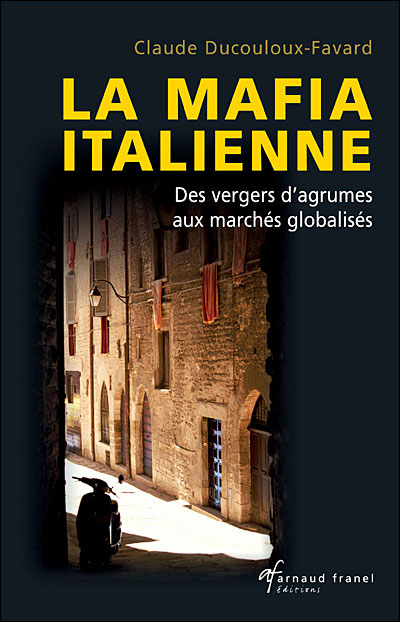
Claude Ducouloux-Favard, avec « La mafia italienne (Des vergers d’agrumes aux marchés globalisés) », offre une publication intéressante. Ce livre, écrit à partir de sources italiennes et très explicatif, évite les lieux communs. Il est en outre idéal pour les lycéens (nombreux à me contacter) et qui font un TPE sur la mafia.
Pour en savoir plus : La mafia Italienne
PS : page 42, Lucky Luciano est condamné pour proxénétisme est non pour fraude fiscale (confusion possible avec Al Capone.)
 Le 12 décembre, le quotidien « Il giornale » révèle que le tribunal de Bologne vient de libérer, pour raison de santé, le mafieux Gerlando Alberti Junior (en photo), et de le placer aux arrêts domiciliaires. Agé de 71 ans, Alberti Junior est le neveu de Gerlando Alberti, un des plus grand trafiquant d’héroïne de Cosa nostra sicilienne dans les années 80. On peut se demander si Graziella, la victime d’Alberti Junior n’a pas été assassiné une 5ème fois (cf. Bonne nuit Graziella).
Attention tout de même à ne pas faire le jeu d’une certaine presse sous contrôle du clan Berlusconi, en particulier le canard « Il giornale » véritable instrument de propagande pour le président du Conseil. En effet, soit le mafieux a été libéré sans raison valable et c’est un scandale, soit il est en phase terminale et il doit être libéré. L’Italie est un état de droit (cf. L’Italie : ce pays modèle). Une inspection est en cours.
En s’attardant sur cette nouvelle, le journal en question jette l’opprobre sur les magistrats, ceux-la même qui poursuivent le président du Conseil dans d’autres affaires (cf. Spatuzza).
Je dédie ce billet aux elèves de 1ES2 de Nantes qui ont choisi les relations médias-mafias pour leur exposé, un sujet bien difficile pour des lycéens francophones.
 La presse française s’enflamme (cf. Richard Heuze, le Figaro du 19/10/2009 : « Quand la mafia tentait de négocier avec Andreotti« ). Elle découvre que la mafia sicilienne a posé des bombes en 1992-1993 (cf. Bon anniversaire Giovanni) et dialoguer avec des politiciens pour obtenir leur faveur…. (cf. Leçon de communication mafieuse par Toto Riina). Ensuite, l’article ne dit pas que la Cour de cassation, dans sa décision du 15 octobre 2004 a condamné Giulio Andreotti pour le délit d’association mafieuse mais les faits (antérieurs à 1980) sont prescrits.
Le 12 janvier 2002, déjà, au cours d’un colloque organisé au Sénat par l’association Démocraties, un « jeune » doctorant expliquait que la première République italienne mourante subissait des attaques mafieuses afin de faire pression sur l’Etat et sa nouvelle classe politique (cf. La Sicilienne rebelle).
 Il se nomme Salvatore Caruso, 46 ans et serait le chef de la « cosca » (la famille mafieuse sicilienne) Cappello, une famille mafieuse très importante dans la ville de Catane. Le 7 novembre dernier alors qu’il est « latitante » (en cavale), la police l’arrête au volant de sa voiture. En réalité, il était en train de réorganiser le clan après que la police et la magistrature italien ont arrêté 50 membres de son groupe mafieux au mois de novembre dernier!
Comment expliquer qu’un seul homme puisse réograniser un clan qui vient de perdre 50 membres?
Peut-être est-il allé voir son banquier en lui disant « tu peux rapatrier mes fonds des îles Caiman puisque le gouvernement a prévu une aministie fiscalo-mafieuse » (cf.une troisième…)?
Avec cette argent, il a commencé à acheter des nouvelles complicités qui lui ont permis d’assurer sa cavale puis d’assurer la collecter du pizzo (le racket)… puis de promettre des emplois municipaux à des jeunes du quartier…
ou infiltration légale dans l’économie mafieuse?
Retrouvez un reportage de 3 minutes (France 3, 19-20, 26/07/2009).
Si la vidéo ne s’affiche pas : cliquez sur ce lien : mafias et grandes surfaces
 Au mois de septembre dernier, les policiers ont débarqué nombreux dans la petite ville de Sambuca di Sicilia dans la province d’Agrigento. Il s’agissait de protéger les parents d’un chef mafieux. En effet, Calogero Rizzuto, 49 ans, arrêté l’année dernière a décidé de collaborer avec la justice de son pays (de devenir un « repenti »). Ses parents, en danger de mort parce que risquant les représailles de la part du clan, ont été transférés dans une commune italienne. Les parents du collaborateur de justice (« repenti ») vivent désormais sous la protection de l’Etat et sous une autre identité… Seule une de ses filles majeure a refusé la protection de l’état et a décidé de rester vivre en Sicile (cf.Pas de femme, pas de mafia).
Avec Calogero Rizzuto, l’état de droit italien vient de gagner une bataille contre la mafia (cf.Le “repenti” rétablit l’Etat de droit en Italie). En effet, Calogero Rizzuto est un « capo mandamento ». Il est donc le chef d’une unité territoriale mafieuse, le « mandamento » une sorte de canton au sein duquel au moins trois familles mafieuses se répartissent l’exploitation abusive des richesses (appel d’offre, racket, trafics…). D’après les enquêteurs, il a déjà fait des aveux circonstanciés qui vont se révéler très précieux dans la lutte antimafia notamment du point de vue des complicités (cf.Arrestation au sein de la bourgeoisie mafieuse).
.
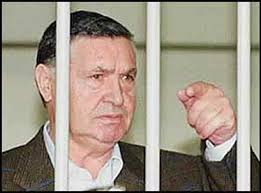 Au mois de juillet dernier, l’ancien chef de la mafia sicilienne, Salvatore Riina arrêté en 1993 et purgeant plusieurs peines de prison à vie, sortait de son silence. Jamais « repenti », Toto Riina (en photo) a l’habitude de distiller de très courtes déclarations à l’intention de plusieurs déstinataires. Au mois de juillet, en pleine polémique provoquée par des nouvelles révélations concernant l’assassinat du juge Paolo Borsellino en 1993 (cf. l’agenda rouge de Vito Vespucci sur Italopolis), le plus meurtrier des mafieux déclarait : »Ce sont eux qui l’ont tué [le juge Borsellino], je suis fatigué de servir de bouc émissaire« .
1. Une phrase adressée à la population :
Elle veut dire assez explicitement « la mafia n’a pas tué le juge, nous sommes des hommes d’honneur persécutés par l’Etat italien »
2. Une phrase adressée aux complices de la mafia :
Le chef de la mafia sicilienne explique aux hommes d’affaire et aux politiciens qu’il peut à tout moment faire des révélations fracassantes contre ceux qui négociaient avec lui l’arrêt des attentats 1992-1993 contre des faveurs (cf. Bon anniversaire Giovanni). En effet, en 1992 et 1993 Cosa nostra sicilienne a posé des bombes en Sicile, à Florence, à Milan et à Rome pour obtenir de la nouvelle classe politique l’arrêt de la lutte antimafia.
3. Une phrase en direction des affiliés de l’organisation mafieuse :
Quelque jours après cette déclaration, les magistrats, espèrant que Toto Riina pouvait aider la justice, se sont rendus en prison pour l’entendre. A la demande des magistrats de « parler », Riina leur a jeté un regard noir comme il en a le secret. En déclarant à la presse que le chef de la mafia n’avait jamais eu l’intention de collaborer, les magistrats, à leur dépens, ont relayé le message envers le « peuple » de Cosa nostra : « toute collaboration avec l’Etat italien demeure prohibé par la mafia» dixit Salvatore Riina qui signe là un coup de génie en matière de communication.
Toto Riina a toujours été un très grand communicant. Parfois, il faisait tuer ses ennemis en fin de matinée ou en fin de soirée pour que le meurtre soit repris en boucle par les journaux télévisés (cf. Violence programmée à Scilla en Calabre).

Dans la nuit du 7 décembre 1970, l’italie devait devenir une dictature comme en Grêce, l’Espagne et le Portugal. Le coup d’Etat organisé par le prince Valerio Borghese échoue mais la République italienne avec sa magistrature indépendante, fait vite la lumière sur cette évènement et ce, même si la participation des mafias sera médiatisée bien après. Retrouvez un extrait de la thèse de doctorat de science politique (cf.Mafias italiennes et relations internationales) qui développe le rôle des mafias italiennes dans ce coup d’Etat avorté :
» … Pour donner le départ du coup d’Etat Borghese, les 6 et 7 décembre 1970, une série d’attentats contre des églises, des supermarchés, des sièges de partis politiques et à la préfecture de police à Reggio ravivaient à nouveau un climat de guerre. Si le coup d’Etat réussissait, l’Italie aurait du se transformer en régime autoritaire. Pour cela les putschistes devaient s’emparer du Quirinale, le bâtiment présidentiel à Rome, de la Rai ainsi que de nombreuses casernes dans tout le pays. Des témoignages sérieux et concordants devant la Commission parlementaire contre le terrorisme font état de la présence des militaires haut gradés prêts à prendre le contrôle de casernes dans toute l’Italie. D’autres témoignages démontrent la mobilisation des mafieux calabrais résidant à Milan et disposés à prendre les rênes de la ville même. A Reggio, les mafieux et les militants d’extrême droite avaient des uniformes de carabinier à distribuer.
A Rome, des tueurs de Cosa nostra [la mafia sicilienne] avaient débarqué par avion dans la nuit du 6 au 7 décembre 1970 afin de neutraliser le chef de la police, ce qui a été confirmé plus tard par des collaborateurs de justice. Ils ont été accueillis par Salvatore Drago, médecin de chambre du ministre de l’intérieur. Le 7 décembre au soir, le prince Borghese arriva avec des hommes armés au ministère de l’Intérieur. Cependant, ce serait lui-même qui aurait donné un coup de téléphone avant de donner le contrordre de mettre fin à l’opération au dernier moment.
Il est désormais acquis que le prince Borghese avait noué des contacts avec des agents de la CIA, en particulier un ancien officier nazi, ainsi qu’avec Lucio Gelli, le grand maître de la loge P2 [ loge maçonnique clandestine et subversive, cf. Hommage à Carlo Alberto Dalla Chiesa ]. Certaines hypothèses font état du fait que les Américains auraient retiré leur accord au coup d’Etat au dernier moment. D’autres affirment que Lucio Gelli manipulait le prince Borghese afin d’obtenir des garanties de la Démocratie chrétienne. Il est fort probable le prince Borghese savait que le coup d’Etat n’irait pas à son terme. Dans tous les cas, l’intimidation prit ses racines en Calabre avec la complicité de la ‘Ndrangheta [la mafia calabraise] et de Cosa nostra…«
L’opération Tora Bora est l’énième action de la stratégie de la tension (1947-1989). Les services de renseignement italiens participèrent activement à cette stratégie. Le SIFAR, le premier service de renseignement des forces armées — largement financé par les industriels italiens — aurait fomenté un coup d’État en 1964. Le directeur du SID — Service d’information de la Défense, qui succède au SIFAR — fut impliqué dans l’attentat de Piazza Fontana en 1969 et dans le coup d’État Borghese. Après de tels évènements, on comprend que l’Italie ait réformé ses services de renseignement en 1977 puis en 2008. Pour en savoir plus sur ces réformes, cliquez sur le doc à gauche ; il s’agit d’un article paru au sein de la publication en photo en haut à droite Renseignement, Média et Démocratie).
 |
- "Cinema-fia" (26)
- 'Ndrangheta, mafia calabraise (148)
- A lire (131)
- A regarder, à enregistrer (51)
- Antimafia (237)
- Articolo in Italiano (2)
- Artigo português (2)
- Biblio de Berlusconi (28)
- Camorra, mafia napolitaine (65)
- Collaboration intermafias (7)
- Cosa nostra, mafia sicilienne (125)
- Drogue (1)
- English article (7)
- Evénement (8)
- France (138)
- Histoire (69)
- La Cosa Nostra italo-américaine (31)
- Légalité en Italie (128)
- Légalité en Italie @en (2)
- Les "écomafias" (27)
- mafia (211)
- Mafias du monde (19)
- mafias.fr publishing (10)
- Pas de femmes pas de mafia (6)
- Présences mafieuses en Italie du Nord (53)
- régulation publique de la drogue (20)
- Sacra corona unita et mafias des Pouilles (14)
- Stidda (2)
- terrorisme (38)
- TPE (95)
- Usage social des biens confisqués (6)
- Vidéos (79)
- Adscriptor
- Aglio E Cipolla
- Altritaliani
- Centro Impastato
- Crimorg
- DRMCC
- Ethicando
- FLARE France
- FocusIn
- Geographie de la ville en guerre
- Ifriqiya : Histoire, défense, et politique en Afrique
- Italopolis
- LCN
- Le journal de l'Intelligence Economique
- Les hommes de l'Antimafia
- Libera Informazione
- Libera Radio
- Mafia zero
- OGC : la revue géopolitique
- OGC : le réseau
- OGC : le site
- OMICRON
- Paradis fiscaux et judiciaires
- Revue OGC
- Sécurité Intérieure
- Sicile mon amour
- Sound of the underworld
- Thierry Colombié